Reclaiming Control: Evidence-Based Strategies for Achieving Digital Wellness in an Always-On World
In the modern era, technology is the scaffolding of our daily lives. From the moment we wake to the moment we sleep, we are tethered to devices that inform, entertain, and connect us. However, this hyper-connectivity comes at a cost. The emerging concept of “Digital Obesity”, the overconsumption of digital data combined with a sedentary lifestyle is driving a spike in physical and mental health issues globally.
Achieving digital wellness does not mean rejecting technology; it means moving from a state of passive consumption to active, intentional usage. It requires re-engineering our habits to ensure that technology serves human biology, rather than eroding it.
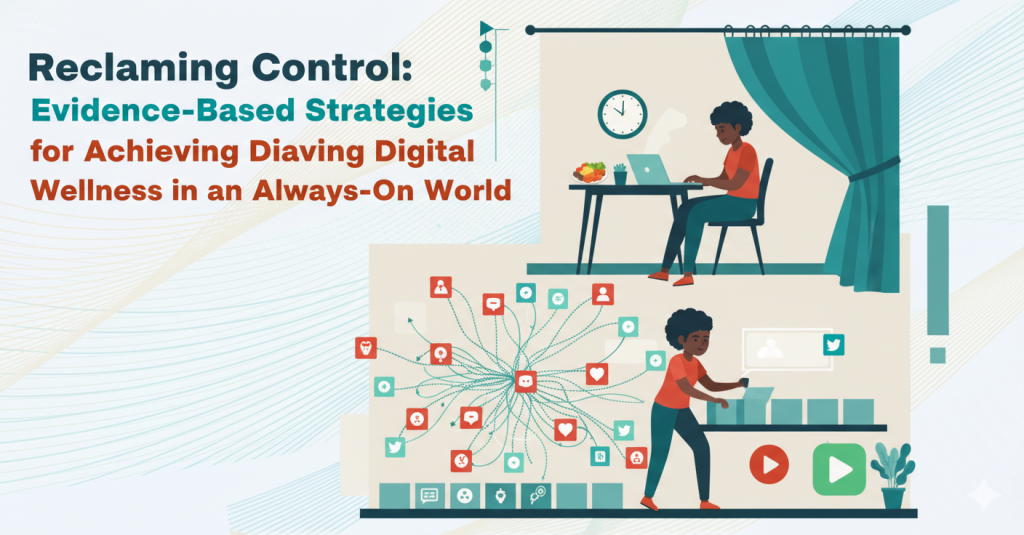
Below are five evidence-based strategies to achieve digital wellness, grounded in physiological and psychological research.
1. Combat Sedentary Digitalism with Micro-Breaks
The most significant physical risk of the digital age is the sedentary behavior associated with screen time. Prolonged sitting inhibits the production of lipoprotein lipase, an enzyme that breaks down fat, thereby increasing the risk of cardiovascular disease and type 2 diabetes (Hamilton et al., 2007).
The Strategy: Implement the Pomodoro Technique or a “Movement Micro-Break.”
-
How: Work for 25-50 minutes, then take a 5-minute standing or walking break.
-
Why: Even short bursts of activity can reset insulin levels and reduce the risk of “The Sitting Disease.” The World Health Organization (WHO) guidelines emphasize that replacing sedentary time with physical activity of any intensity provides health benefits (WHO, 2020).
2. Protect Your Circadian Rhythm: The Digital Sunset
Sleep is the foundation of mental health, yet it is the first casualty of the digital age. Screens emit blue light (short-wavelength enriched light), which suppresses the production of melatonin, the hormone responsible for regulating sleep-wake cycles.
The Strategy: Enforce a “Digital Sunset.”
-
How: Disconnect from all blue-light-emitting devices (phones, laptops, tablets) at least 60 minutes before bedtime.
-
Why: Research from Harvard Medical School indicates that blue light exposure at night shifts the circadian clock, leading to sleep deprivation, which is linked to depression, obesity, and cardiovascular disease (Harvard Health, 2020).
3. Mitigate Digital Eye Strain: The 20-20-20 Rule
“Computer Vision Syndrome” is affecting millions of workers and students, characterized by dry eyes, blurred vision, and headaches. Staring at a screen reduces our blink rate by up to 66%, causing strain.
The Strategy: Adopt the 20-20-20 Rule.
-
How: Every 20 minutes, look at something 20 feet away for at least 20 seconds.
-
Why: This simple exercise relaxes the ciliary muscles in the eye, reducing fatigue and preventing long-term myopia progression (American Optometric Association, 2023).
4. Practice Digital Nutrition: Curate Your Feed
Just as we watch what we eat, we must watch what we consume digitally. Social media platforms often trigger “Social Comparison Theory,” where users evaluate their own worth based on the curated “highlight reels” of others. This is a primary driver of anxiety and body dysmorphia among youth.
The Strategy: Curate your environment.
-
How: Audit your social media feeds. Unfollow or mute accounts that trigger feelings of inadequacy, anxiety, or anger. Follow educational, inspiring, or calming content instead.
-
Why: A study by the Royal Society for Public Health found that platforms like Instagram can have a net negative impact on well-being due to body image concerns and FOMO (Fear Of Missing Out) (RSPH, 2017).
5. Establish the Right to Disconnect
The blurring of work-life boundaries leads to chronic “Technostress”, the stress caused by the inability to cope with new computer technologies in a healthy manner. The pressure to respond to emails after hours keeps the body in a state of high alert (sympathetic nervous system activation), increasing cortisol levels.
The Strategy: Set rigid boundaries.
-
How: Turn off non-essential notifications after work hours. Use “Do Not Disturb” modes during deep work sessions.
-
Why: Psychological detachment from work during off-hours is crucial for recovery and preventing burnout (Sonnentag, 2012).
Conclusion
Digital wellness is not a luxury; it is a prerequisite for a sustainable future. By integrating these habits moving more, sleeping better, protecting our eyes, and curating our mental intake we can harness the power of the digital age without falling victim to it.
References
-
American Optometric Association. (2023). Computer Vision Syndrome (Digital Eye Strain). St. Louis, MO: AOA.
-
Hamilton, M. T., Hamilton, D. G., & Zderic, T. W. (2007). Role of low energy expenditure and sitting in obesity, metabolic syndrome, type 2 diabetes, and cardiovascular disease. Diabetes, 56(11), 2655-2667.
-
Harvard Health Publishing. (2020). Blue light has a dark side. Harvard Medical School.
-
Royal Society for Public Health (RSPH). (2017). #StatusOfMind: Social media and young people’s mental health and wellbeing. London: RSPH.
-
Sonnentag, S. (2012). Psychological Detachment From Work During Off-Job Time: The Role of Job Stressors, Job Involvement, and Recovery-Related Self-Efficacy. European Journal of Work and Organizational Psychology, 21(3), 325-342.
-
World Health Organization (WHO). (2020). WHO guidelines on physical activity and sedentary behaviour. Geneva: World Health Organization.
Author: The Secretariat, Coalition for Digital Education Wellness (CoDEW)